

How to Cope With a Fussy Baby and Understand the Witching Hour
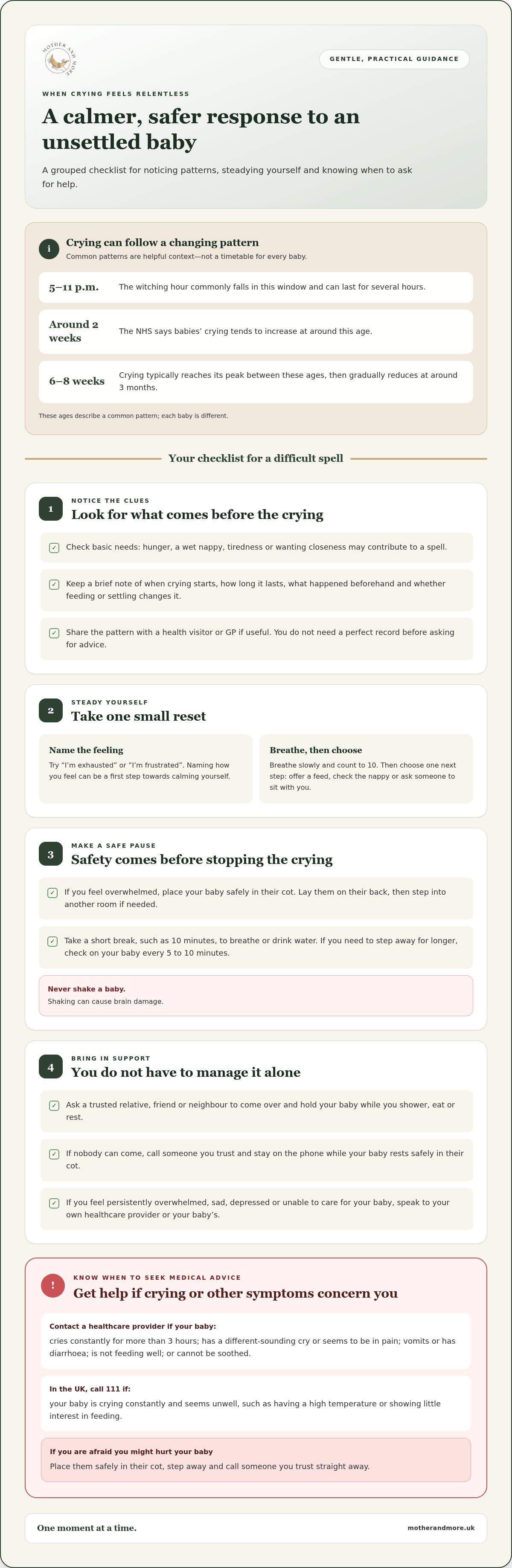
An unsettled evening doesn’t automatically mean you’re doing anything wrong. The witching hour commonly falls between 5 p.m. and 11 p.m. and can last for several hours; knowing how to cope with a fussy baby starts with recognising this pattern and responding calmly. According to the NHS, babies’ crying tends to increase at around 2 weeks old and gradually reduce at around 3 months.
When crying and short sleeps leave you both worn down, it’s understandable to feel frustrated, helpless or unsure what to try next. Babies can become fussy for different reasons, and caregiver stress can make an already difficult moment feel more intense. This isn’t a judgement on you. It’s a reminder that your wellbeing matters, too.
This article looks at why babies may become unsettled, how frequent waking and difficulty settling can fit into the picture, and what signs may point to the witching hour. You’ll also find gentle ways to soothe your baby and steady yourself, plus guidance on when crying or other symptoms call for medical advice. Take what helps, one moment at a time.
Table of Contents
1. Why is my baby so unsettled?
For newborns, crying often increases before it begins to ease. The NHS says babies’ crying tends to increase at around 2 weeks old and gradually reduce at around 3 months old. These ages describe a common pattern, not a timetable every baby follows.
Some babies cry more than others, and the reasons aren’t always clear. Hunger, a wet nappy, tiredness or wanting closeness may explain a particular spell. For instance, if your baby cries before a feed and settles afterwards, hunger may have contributed. Notice what happened just before the crying instead of assuming there’s one cause.
Crying can also become more intense before it improves. A baby’s crying typically reaches its peak between 6 and 8 weeks old. Colic sometimes occurs in babies under 5 months old, but a crying spell alone doesn’t identify its cause. Note when crying starts, how long it lasts, and whether feeding or settling changes the pattern.
When you feel overwhelmed, focus first on safety, not on stopping the crying immediately. If you can’t get someone to care for your baby, the NHS says you can place them safely in their cot or pram and take a short break, such as 10 minutes. Put your baby down gently, step away, and use the time to breathe or drink water.
A cot offers a safe place while you regain your composure. Lay your baby on their back in the cot, then take a few minutes in another room if needed. If you need to step away for longer, a safe-place approach is to check on your baby every 5 to 10 minutes. Never shake a baby; shaking can cause brain damage.
Ask a trusted relative, friend or neighbour to come over when the crying feels relentless. They could hold your baby while you shower, eat or sit quietly. If nobody can come, call someone you trust and stay on the phone while your baby rests safely in their cot.
These steps can help you respond more steadily, even if your baby remains unsettled. If you’re wondering how to cope with a fussy baby, start by checking basic needs, noticing patterns and taking a safe pause when your stress rises. A calmer reset gives you space to choose your next gentle step.
2. Effects of an unsettled baby on parental mental health
Repeated crying can make everyday tasks feel difficult. If your baby cries through a meal, you may struggle to eat or think clearly. Broken rest can leave parents irritable, tearful or distant from others. These reactions don’t mean you’re failing; they show that sustained demands are taking a toll.
Your feelings may shift from one moment to the next. You might feel loving and connected, then frustrated when another attempt to settle your baby doesn’t work. You may also feel guilty or worry that you should know what to do. Naming the feeling, such as “I’m exhausted” or “I’m frustrated”, is a first step towards calming yourself.
Try one small reset during a difficult spell. Put your baby safely in their cot, breathe slowly, and count to 10. Then decide on one next action, such as offering a feed, checking their nappy or asking someone to sit with you. If crying happens around breastfeeds, note the timing and feeding pattern; positioning and attachment may affect how settled your baby feels.
Ask for practical, specific support. A trusted relative, friend or neighbour could hold your baby while you shower, eat or rest, or stay during the part of the day that feels hardest. If you feel persistently overwhelmed, sad, depressed or unable to care for your baby, speak to your own healthcare provider or your baby’s.
Keep a brief record of when the crying starts, how long it lasts and what else you notice. For example, note whether your baby feeds, settles after a cuddle or seems uncomfortable. Sharing these details can help a health visitor or GP understand the pattern and consider possible causes. You don’t need a perfect record before asking for advice.
Contact a healthcare provider if your baby cries constantly for more than 3 hours, has a different-sounding cry or seems to be in pain. Seek advice if your baby vomits, has diarrhoea, isn’t feeding well, or cannot be soothed. In the UK, call 111 if your baby is crying constantly and seems unwell, such as having a high temperature or showing little interest in feeding.
If you’re afraid you might hurt your baby, get help straight away. Place them safely in their cot, step away and call someone you trust. A crying baby can be deeply distressing, but you don’t have to manage the fear alone. Asking for help protects both of you.
3. Short sleeps and difficulty settling
Short naps and frequent night waking can leave your baby unsettled and you exhausted. Difficulty settling may show up as crying when you put your baby down, waking soon after a nap, or repeatedly needing feeds and cuddles. Keep a simple note of when your baby sleeps, feeds and wakes. It can help you spot which parts of the day feel hardest.
Try a calm, repeatable wind-down before sleep. For example, lower the lights, speak softly, check your baby’s nappy, then offer a cuddle or feed if needed. A simple sequence matters more than an elaborate routine. If your baby becomes more alert, pause and reduce stimulation rather than adding activities. A familiar pattern gives you a practical starting point when settling feels difficult.
Some babies may need to go to sleep around 6 or 8 at night. Use your baby’s behaviour to guide the timing: rubbing their eyes, turning away or becoming unsettled can suggest they need a quieter moment. If your baby is already crying, try reducing noise and holding them close. There’s no need to force a fixed bedtime when your baby’s cues point elsewhere.
Sleep training may be started after about 2 to 4 months of age. Before trying a structured approach, consider your baby’s age, feeding needs and current routine. A gradual approach can begin with one settling cue, such as a quiet song, then a pause to see how your baby responds. If crying escalates, comfort them and reassess rather than treating each sleep as a test.
Protect your own rest with a clear handover. If another trusted adult is available, agree who will respond to the next wake-up so you can lie down without listening for every sound. If you’re alone, prepare water and a snack before settling your baby, then rest whenever a safe opportunity arises. Even a short pause can make the next feed or cuddle feel more manageable.
When frustration rises, breathe in through your nose and out through your mouth, then count slowly to 10. Name the feeling, such as “I’m tired” or “I’m frustrated”, before choosing your next step. If your baby falls asleep during a drive, take them out of the car seat as soon as possible and place them on a firm, flat surface to sleep. This gives you a clear action instead of leaving them asleep in the seat.
Short sleeps can feel relentless, especially when you’re caring for other children, too. Focus on one change at a time: note a sleep cue, try the same quiet wind-down and make space for your own rest. If frequent waking or difficulty settling continues to concern you, share your notes with your health visitor or GP.
4. Signs that fussiness may be the witching hour
A predictable evening pattern can point towards the witching hour. Babies often cry more during the late afternoon or early evening, and fussiness commonly falls between 5 p.m. and 11 p.m. Episodes may last several hours. Your baby might seem content earlier, then become harder to soothe around the same time each day.
Age and repetition can offer useful clues. This pattern often begins when a baby is 2 to 3 weeks old, and may ease around 3 to 4 months. Note when crying starts, how long it continues, and what helps, such as a feed, a cuddle or a quieter room. A simple record can help you see whether the evening spells follow a familiar rhythm.
Fussiness alone doesn’t prove your baby is experiencing the witching hour. Look at their overall behaviour: they may cry when put down, resist settling or wake frequently, yet feed and respond as usual. Try one gentle soothing change at a time, such as lowering the noise, holding them close or checking their nappy. Notice whether it affects the crying.
Look for signs that suggest illness rather than a recurring evening spell. A baby who has not had a wet nappy in the past 8 hours has an urgent warning sign. Also notice whether your baby is feeding poorly, vomiting, has diarrhoea, seems unusually sleepy, or has a cry that sounds different or painful. Write down what you observe and when it began.
If your baby cries constantly and seems unwell, call 111 in the UK. Examples include having a high temperature or showing little interest in feeding. Contact a health professional if your baby cannot be soothed or the crying continues for more than 3 hours. These details help distinguish a familiar evening pattern from a concern needing medical attention.
Some signs need emergency help, not another soothing attempt. The NHS says parents should call 999 and ask for an ambulance if a baby has an emergency sign, including a seizure, breathing difficulty or being unresponsive. Keep your phone nearby and describe what you can see clearly. Don’t wait for the usual evening spell to pass.
If your baby has a familiar unsettled spell, prepare a calm space before it usually begins. Keep feeding needs, a clean nappy and a dim room in mind, then offer comfort without rushing through several changes. If the pattern shifts suddenly, your baby seems unwell or you feel concerned, seek medical advice. The timing matters, but your baby’s condition matters more.
5. How caregiver stress may affect a fussy baby
A baby’s crying can raise your stress, and your tension can add to theirs. That can make an unsettled moment harder for both of you. It doesn’t mean you’ve caused your baby’s fussiness or need to feel calm every second. It means your own state is part of the moment, and a small pause can change how you respond.
Stress can affect your voice, movements and attention. You might speak more quickly, switch between soothing methods or find it harder to notice whether your baby is hungry or tired. Your baby may respond with more crying or restlessness. This can happen without either of you doing anything wrong.
Try a brief reset before choosing what to do next. Name the feeling: “I’m frustrated” or “I’m worried.” Then breathe in through your nose and out through your mouth, counting slowly to 10. Let your shoulders drop and unclench your hands. These steps won’t guarantee that crying stops, but they can help you approach the next cuddle, feed or nappy change more steadily.
Keep your response simple while your baby is crying. Check one need at a time, such as feeding, a clean nappy or a quieter room. Then offer one form of comfort, perhaps holding your baby close or speaking softly. Give it a moment before adding something else. A slower rhythm can help you notice your baby’s cues instead of reacting to every sound at once.
Notice what happens before your stress builds. Perhaps the hardest moments come after a short sleep, during an evening feed or while you’re preparing dinner. If you spot a pattern, choose one practical adjustment: prepare a snack beforehand, sit somewhere comfortable for feeding or ask a trusted adult to take a household task. A small plan can reduce pressure at a predictable point in the day.
If your baby’s crying leaves you feeling unable to cope, tell someone plainly: “I need you to stay with me while the baby cries.” If you’re afraid you might hurt your baby, seek help immediately and place them somewhere safe. You deserve support before reaching a crisis point. Asking for help is a caring step for both of you, not a sign of failure.
For gentle ways to strengthen your connection through touch and movement, explore support for parent-and-baby bonding.
Mother And More: Baby Massage Courses
Mother And More offers Baby Massage classes for parents who want to explore gentle touch and connection with their baby. These calm, low-stimulation classes support bonding, digestion, settling and parent confidence. Baby Yoga classes offer another shared experience through gentle movement. For support focused on your wellbeing, Mother And More also offers One to One Life Coaching and Group Coaching, with space to reflect on the changes and challenges of parenthood.
These options complement everyday soothing; they don’t replace medical advice if your baby seems unwell or you’re concerned about their crying. Choose the support that feels useful for you and your family. To explore classes and coaching in East London, visit motherandmore.uk.
Choose a gentle next step for your family
There’s no single perfect response to every difficult moment. As you learn how to cope with a fussy baby, choose a small next step that suits what you need now: a calmer way to connect with your baby or space to reflect on how parenthood is affecting you.
Mother And More offers Baby Massage and Baby Yoga classes for shared experiences with your baby, alongside One to One Life Coaching for personal support. These are options to explore alongside the practical steps in this article, not a measure of how well you’re doing as a parent. Take your time choosing what feels helpful.
If you’d like to explore those options, contact Mother And More. Keep asking for support when you need it, and give yourself permission to take each day one moment at a time. You’re learning your baby, and that learning grows through small, caring steps.
Frequently Asked Questions
What Is the Witching Hour for Babies?
The witching hour is a recurring spell of evening fussiness, often between 5 p.m. and 11 p.m. Your baby may cry intensely, resist settling or need repeated comfort for several hours. It often begins when babies are 2 to 3 weeks old and commonly starts easing around 3 to 4 months. A useful clue is a similar pattern on several evenings, rather than one unsettled night.
Why is my baby so unsettled?
Babies can become unsettled for several reasons, and sometimes there’s no obvious cause. Check whether your baby needs feeding, a clean nappy, rest or closeness. Notice the context: crying just before a feed differs from fussiness after a noisy visit. A brief note of what happened beforehand and what helped can make patterns easier to recognise and explain to your health visitor.
What are common reasons babies are fussy or crying?
Hunger, tiredness, discomfort, needing a cuddle or feeling overwhelmed by noise can all coincide with crying. For instance, a baby may turn away from bright lights after visitors, or fuss when a nappy feels wet. Colic can also occur in babies under 5 months old. These possibilities aren’t a diagnosis; note changes around feeds, sleep and comfort to help explain the crying.
How can I soothe a fussy baby step by step?
To work out how to cope with a fussy baby, follow a simple sequence: pause, check their nappy and clothing, offer a feed if it’s due, then try a quiet cuddle or gentle rocking. Change one thing at a time so you can notice your baby’s response. If you feel overwhelmed, place your baby safely in their cot and step away briefly to regain composure.
How can I tell if my baby is hungry, tired, uncomfortable or overstimulated?
Look at what happens around the crying rather than relying on one cue. Rooting or settling after a feed may suggest hunger; yawning or turning away can signal tiredness. Check for a wet nappy, tight clothing or a position that seems uncomfortable. After busy surroundings, try a quieter room and fewer sounds. These clues are useful observations, not definite explanations.
How can I cope with a fussy baby at night or during witching hour?
Prepare a calm evening routine before your baby usually becomes unsettled. Keep the room quiet, reduce bright light and have feeding essentials nearby so you’re not searching while holding your baby. Try a cuddle or a gentle, familiar song, then give your baby time to respond. If the crying feels like too much, ask a trusted adult to share the care or take a short reset.
Could reflux, colic, allergy or illness be causing my baby’s fussiness?
Reflux, colic, allergy and illness are possible reasons for fussiness, but crying alone can’t tell you which is involved. Notice whether crying happens around feeds, whether your baby vomits or has diarrhoea, and whether feeding changes. Keep those observations for your GP or health visitor. If your baby seems unwell or you’re worried, seek medical advice rather than trying to diagnose the cause yourself.
When should I contact a GP, health visitor or NHS 111 about a crying baby?
Contact a health professional if your baby cries constantly for more than 3 hours, has a different-sounding cry, seems in pain, vomits, has diarrhoea, feeds poorly or cannot be soothed. Call NHS 111 if constant crying comes with signs of illness, such as a high temperature or little interest in feeding. According to the NHS, call 999 and ask for an ambulance for emergency signs including a seizure, breathing difficulty or unresponsiveness.



Comments