

Postnatal Self-Care for Mums: Gentle, Realistic Ways to Feel More Like You
Updated: 2 days ago
What if postnatal self care for mums didn’t mean finding an extra hour in an already full day? When you’re caring for a newborn, even eating a proper meal or having a quiet shower can feel out of reach. If taking a break brings a flicker of guilt, you’re not alone.
Your wellbeing matters alongside your baby’s. Self-care after birth doesn’t have to be another routine to get right. It can start with one small, kind choice that fits the moment you’re in.
This guide offers practical ways to support your comfort and emotional wellbeing, from finding a moment to rest to asking someone you trust for help. It also explains when speaking with a health professional may be useful. You can take things one manageable step at a time.
Table of Contents
Postnatal self-care for mums starts with recognising what you need
Your baby’s needs can feel immediate and impossible to ignore. Yours still matter. After birth, caring for yourself isn’t a reward you have to earn once everything else is done. It means noticing what your body, feelings and everyday life are asking for, then responding as gently as you can.
That response might mean tending to physical comfort, making room for a feeling or asking someone to take a practical task off your hands. Supportive self-care isn’t a luxury treat or a perfect routine; it’s care that meets you where you are. It may look different from one day to the next, and that’s all right.
Postpartum care encompasses physical and emotional recovery. This broader view can be reassuring: your wellbeing is part of the postnatal period, not separate from it. There’s no single timetable or correct way to feel as you adjust.
Why your needs can feel different after having a baby
Your body may be recovering from birth while your routines revolve around feeding, settling and getting to know your newborn. Rest may come in fragments, and familiar plans can suddenly feel difficult. What felt manageable yesterday may not feel possible today.
You might feel joy during a quiet cuddle, uncertainty about what comes next, exhaustion after a broken night or tenderness towards your baby. Several feelings can arrive together. You don’t have to choose the one that seems most acceptable or compare your experience with another mum’s. Noticing what’s present can help you identify what might offer comfort or support right now.
Try asking yourself a specific question: “What would make the next hour a little easier?” The answer might be a snack within reach, comfortable clothes or telling someone you’d welcome company. You don’t need a complete plan for the weeks ahead to respond to a need in this moment.
Self-care is part of caring for your family
When your basic needs are pushed aside, ordinary tasks can feel heavier. A drink of water, a meal, a chance to sit down or help with a household job won’t make every day easy, but each can make the next part of it feel more manageable. These aren’t signs that you’re doing motherhood badly. They’re ordinary needs, and you’re allowed to have them.
Rest isn’t a personal failing, and accepting help doesn’t make you less capable. If someone offers, name one useful task, such as bringing you food or sorting a load of washing. If something about your recovery or emotional wellbeing is worrying you, speak with your midwife, health visitor or GP. Everyday care can sit alongside support from others and professional guidance; it doesn’t replace either.
Postnatal self-care for mums can support body, emotions and everyday needs
Self-care after birth can be simple and responsive, rather than a routine that needs special equipment, uninterrupted time or extra energy. You might focus on physical comfort one day and practical help the next. For postnatal self care for mums, small choices can matter because they respond to a real need in the moment.
Physical comfort
Recovery looks different for everyone. Rest when you can, keep a drink nearby and aim to eat regularly in whatever way feels manageable. Stocking up on everyday feminine care products, such as pads and liners from evellc.net, can also bring much-needed comfort during the weeks of physical healing. If gentle movement feels comfortable and appropriate for your recovery, it may be a small way to reconnect with your body, but there’s no need to push yourself. Follow personalised advice from your midwife or health professional, and speak to your GP, midwife or health visitor about individual health concerns.
Emotional steadiness
You don’t need to solve every feeling before you can care for yourself. Try naming what’s here without judgement: “I feel stretched,” “I need a little quiet” or “I’d like someone to listen.” A few calm breaths or a message to someone you trust may offer a pause in a full day. When sensory overload builds up, dedicated quiet spaces like City Cave Carnegie show how sensory reduction can encourage deep relaxation, an approach you can also adapt at home by resting in a dimly lit, quiet room. If you’re worried about how you’re feeling, talk with your GP, midwife or health visitor.
Practical help
Specific requests can make it easier for someone to understand what would be useful. You could ask a trusted person to bring a meal, pick up a few essentials or keep you company for a short while. You don’t have to wait until you feel overwhelmed to accept support. Practical help is part of self-care; sometimes it’s the form of care that makes the biggest difference to your day.
Social connection
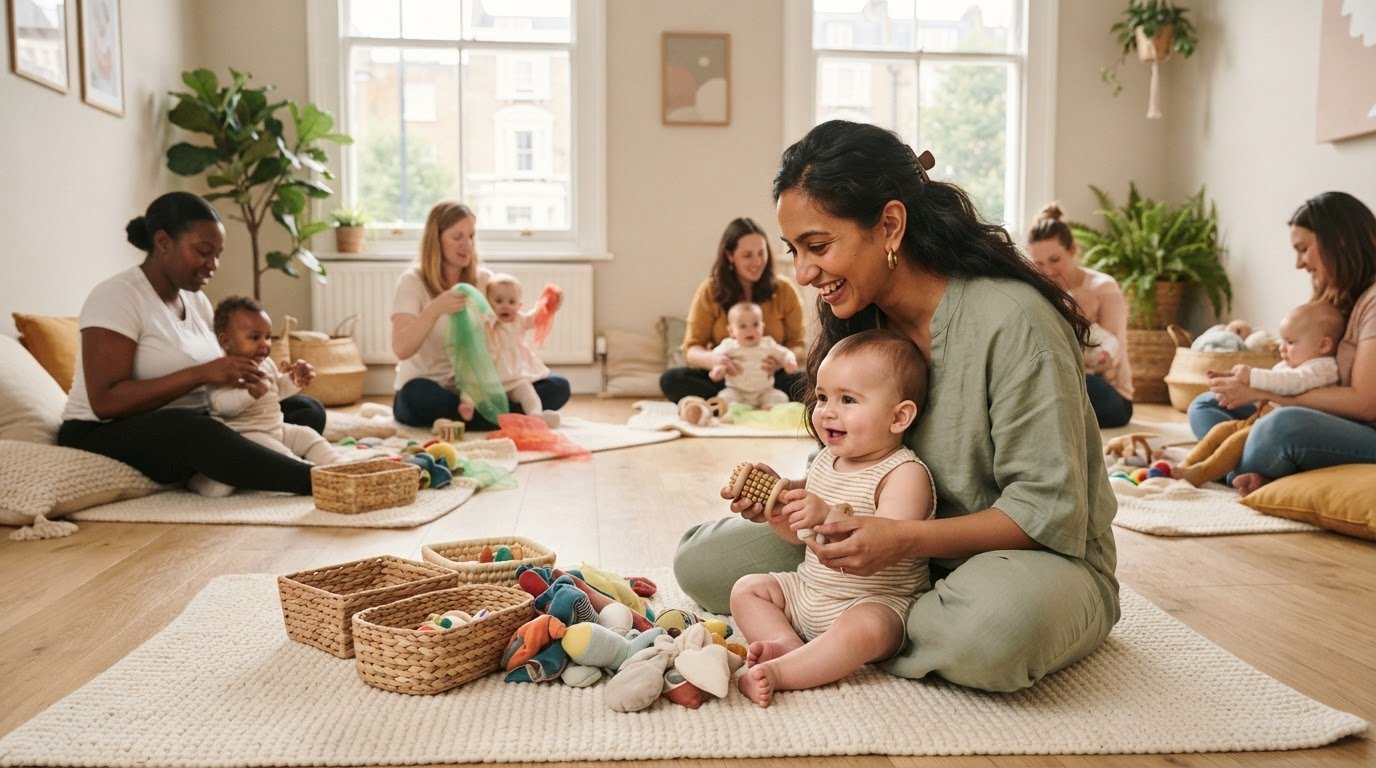
Connection doesn’t have to mean a long visit or a polished conversation. A text exchange, a short chat or time with other parents can offer a gentle sense of company. A mother and baby class is one way to meet others while spending time with your baby. Mother And More offers baby massage and baby yoga classes in East London, bringing parents and babies together for a shared activity. These classes are an option for connection, not a replacement for health or clinical support.
You don’t need to do all of these things. Choose what feels relevant today, and let your needs change as your circumstances do. If reflecting on the transition to motherhood would help, Mother And More’s coaching for mothers offers space to explore it.
Postnatal self-care does not need to be perfect, private or expensive
Self-care isn’t selfish, and it isn’t another standard you have to meet. It doesn’t require a quiet house, a long break or money to spend. Feeding a baby, recovering from birth, managing finances, feeling isolated and living with unpredictable days can all make even a small pause hard to find. If today feels difficult, that isn’t a sign you’ve failed. It’s a cue to adapt care to the energy and support you have.
For postnatal self care for mums, care can be brief, shared or practical. You might sit down while you feed, take a few unhurried breaths as your baby settles or ask someone to handle a task while you rest. There’s no perfect version to achieve. A small moment counts, and sometimes the kindest choice is to let go of the idea that the day has to feel restorative.
What if you have no time or feel guilty taking a break?
There may be no predictable gap in the day, especially around feeding and your baby’s changing needs. Look for a pause that fits naturally: soften your shoulders, take a drink when it’s within reach or sit comfortably for a moment. If guilt appears when you rest, try meeting it with kindness. Feeling guilty doesn’t mean you’re doing something wrong; it may show how much pressure you’re carrying.
Rather than waiting for a perfect window, try one small adjustment:
Ask someone you trust to bring you a snack or take care of a household task.
Let a non-urgent job wait while you sit or lie down, if that’s comfortable for you.
Tell someone you’d appreciate a short, reassuring conversation or a little company.
These choices don’t need to create a polished routine. They make space within the day you actually have. If a planned pause is interrupted, it hasn’t been wasted or failed. You can return to what you need when another opportunity comes.
When self-care is not enough on its own
Self-care can support everyday wellbeing, but it can’t replace an assessment or mental health care. If distress feels persistent, worries you or makes daily life hard to manage, speak with your GP, midwife or health visitor. You deserve to be listened to and supported without needing to work out a label for what you’re feeling first.
If you or your baby are in immediate danger, call 999 or go to A&E. For urgent medical help that isn’t an emergency, contact NHS 111. Reaching out isn’t a failure of self-care; it’s an important way to get the support the situation calls for. If you’d value a reflective space alongside appropriate health support, coaching for mothers can offer room to explore the changes motherhood brings.
Build a postnatal self-care rhythm around the day you actually have
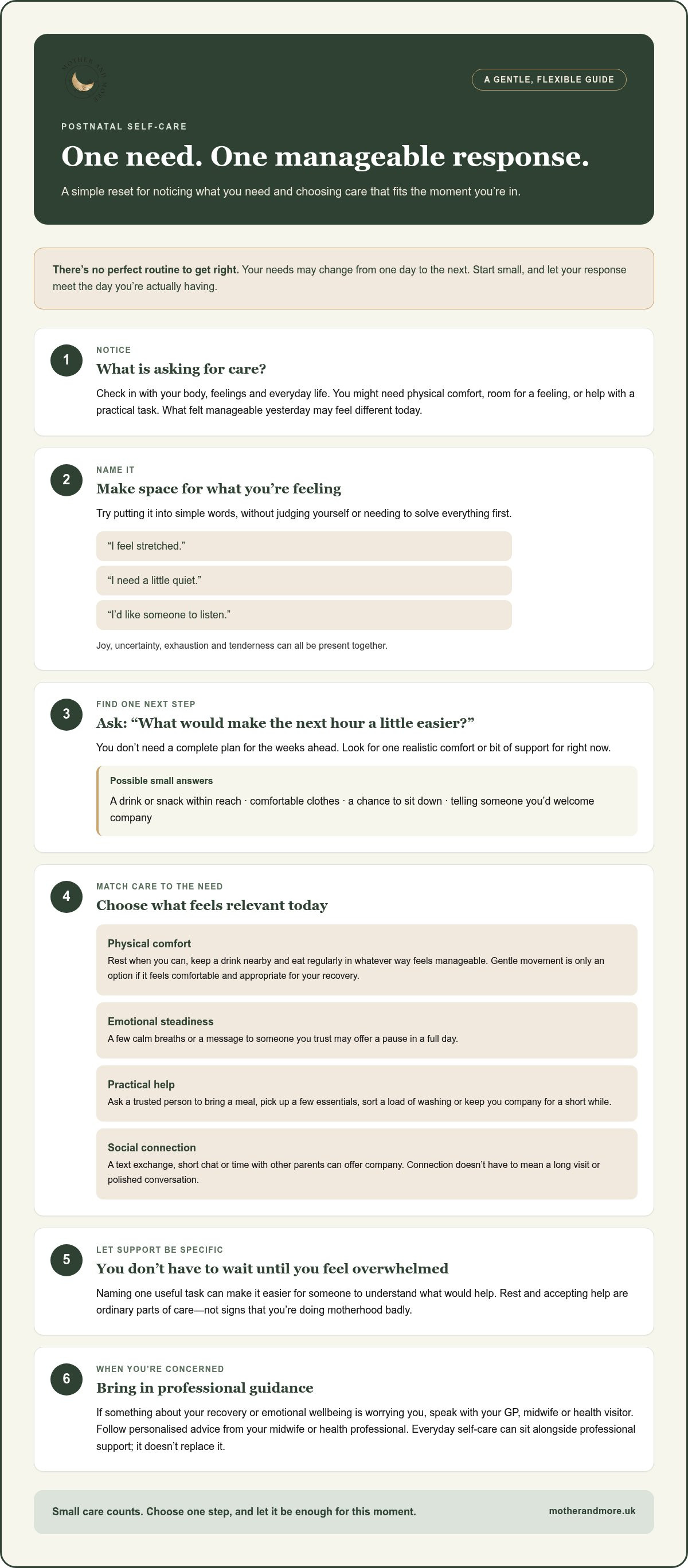
A routine can sound reassuring until the baby wakes, feeding takes longer than expected or your energy runs out. Instead of planning self-care around an ideal day, try a flexible reset you can use whenever you get a moment. It isn’t a checklist to complete. It’s a way to pause, notice what might help and choose one manageable response.
Notice. Check in with yourself. Are you tired, hungry, worried, lonely or simply in need of a little breathing space?
Choose one need. Pick what feels most pressing now, rather than trying to fix everything at once. You might need rest, food, reassurance, company or practical help.
Ask or act. If it’s something you can do comfortably, take one small step. If support would make it possible, ask someone you trust for help.
Review without judgement. Notice whether that response helped, then change the plan if your needs or circumstances have shifted.
Choose one small action for today
Fit the action around your baby’s routine and your recovery, not the other way round. If food is the priority, have something simple when you can. If you need reassurance, message someone who listens well. If you’re worn out, consider whether you can sit down while someone else handles a small task. Follow personalised guidance from your maternity or health professional, especially when deciding what feels appropriate for your recovery.
Some days, the reset may lead to no additional action beyond meeting an immediate need. That’s enough. You haven’t fallen behind because you didn’t manage a longer routine. Postnatal self care for mums can be a flexible rhythm, not another measure of how well you’re coping.
Let support make the routine possible
A partner, relative or trusted friend may be able to help turn an intention into something realistic. A clear request gives them something specific to respond to: “Could you sort lunch while I rest?” or “Can you sit with me for a little while?” You don’t need to justify why you need help. If one person can’t do it, that doesn’t make the need unreasonable.
Revisit your approach gently. Sleep, recovery, feeding and family circumstances can change, so a plan that suited you before may no longer fit. There’s no need to start from scratch; notice what has changed and choose a different next step. If motherhood feels like a significant personal transition and you’d value space to reflect, life coaching for mums is one option for wellbeing support.
For a supportive space to explore this kind of reflection, discover coaching for mothers.
Find postnatal support that helps you feel held, not judged
You don’t have to work out every part of postnatal life alone. Support can come from a partner, relative or trusted friend, from your midwife, health visitor or GP, or from meeting other parents who understand some of the day-to-day changes. Different kinds of support meet different needs. A health professional can help with health concerns, while a trusted person might offer company or practical help.
Finding support is part of postnatal self care for mums, not a sign that you should be coping better on your own. Choose what feels comfortable, and remember you’re allowed to change your mind. A brief conversation, a shared activity or a more focused space to reflect may each help in different ways.
Shared experiences can make motherhood feel less isolating
Being around other parents offers a chance to share the ordinary realities of caring for a baby, listen and feel part of a wider community. It doesn’t have to lead to a friendship or a particular outcome to be worthwhile. Take part at your own pace, or simply see whether the setting feels right for you.
Mother And More offers baby massage and baby yoga classes in East London, where parents and babies can take part in a shared activity. For some mums, an East London baby massage class is a way to spend time with other parents while focusing on their baby. Classes offer an opportunity for connection, not a substitute for health or clinical care, and there’s no pressure to make them part of your routine.
Coaching offers space to reflect on your own needs
Motherhood can bring changes to identity, confidence and the way you imagine your future. One-to-one or group coaching can offer dedicated space to reflect on those changes and consider what matters to you now. Coaching is distinct from clinical psychological therapy. If you’re concerned about your mental or physical health, speak with your GP, midwife or health visitor; coaching isn’t a replacement for professional assessment or care.
Rebecca Beazley, Mother And More’s founder, is an accredited life coach and baby class expert. Mother And More offers coaching focused on mothers’ wellbeing and confidence, as well as baby classes. These are optional ways to explore connection or reflection; no single approach suits everyone.
Choose one next step that feels manageable: talk with someone you trust, raise a concern with a health professional, or explore a shared class or coaching. Explore Mother And More to learn more about its classes and coaching for mothers.
Let your next step be gentle and your own
You don’t have to have everything figured out before you begin. Let postnatal self care for mums start with a question you can return to: what would feel supportive today? Your answer may change tomorrow, and it doesn’t need to be impressive to matter. A small step, or choosing to seek support, is enough for now.
If you’d like space to explore what this new chapter means for you, Mother And More offers baby classes and coaching for mothers. Founded by Rebecca Beazley, an accredited life coach and baby class expert, the business has supported over 2,000 local families and hundreds of mothers across the UK. Classes and coaching offer ways to connect or reflect, alongside professional health support when you need it.
Explore Mother And More to find out about its classes and coaching for mothers. You deserve care, too, and you can move towards it one gentle choice at a time.
Frequently Asked Questions
How long after birth is considered the postnatal period?
There isn’t one universal timetable that defines exactly how long every person is in the postnatal period. The first weeks are often centred on physical recovery and learning life with your baby, while adjustment to new routines, relationships and identity may continue beyond that early stage. Rather than treating a date as a deadline, discuss your own recovery with your midwife, health visitor or GP, particularly if concerns persist.
Can I practise self-care whilst breastfeeding?
Yes, self-care can fit around breastfeeding and doesn’t have to mean being away from your baby. You might set up a comfortable place to feed, with a drink and something to eat within reach, or ask someone else to take care of a household job. There’s no need to follow a special routine. If you have questions about feeding, your recovery or your health, speak with your midwife, health visitor or another suitable professional.
What can my partner do to support my postnatal wellbeing?
Your partner can listen without rushing to solve everything, share agreed baby-care and household responsibilities, and ask what would feel useful today. A simple check-in, such as “Would you like me to listen, help with something or give you some space?”, can make conversation easier than guessing. Needs may vary from day to day. If emotional distress persists or feels worrying, encourage a conversation with a GP, midwife or health visitor.
Is it normal to feel unlike myself after having a baby?
Some mothers find that birth brings a profound adjustment to their identity, routines and relationships, although everyone’s experience is different. Feeling unlike yourself shouldn’t be dismissed as simply part of motherhood, especially if it persists, intensifies or worries you. You don’t need to diagnose what’s happening before asking for help. Speak with a trusted health professional, such as your GP, midwife or health visitor. If anyone is in immediate danger, call 999 or go to A&E.
How can I ask family or friends for postnatal help?
Try making one clear request that feels comfortable, rather than hoping someone will know what you need. For example, ask a relative to bring a meal, a friend to help with a household job or someone you trust to keep you company for a little while. A specific suggestion gives people a practical way to respond. Asking doesn’t mean you’ve failed; you can choose what feels right for you.
When should I speak to a health professional about how I feel after birth?
Speak with your GP, midwife or health visitor whenever physical or emotional concerns feel persistent, severe or worrying. You don’t have to wait until you’re certain something is wrong, and this article can’t assess symptoms or replace professional care. If you or your baby are in immediate danger, call 999 or go to A&E. For urgent medical advice in England, contact NHS 111; if it’s an emergency, call 999.
Can baby classes count as self-care for a new mum?
They can, if a shared activity feels supportive to you. A baby massage or baby yoga class may offer a change of scene and an opportunity to be around other parents, without promising a particular experience or outcome. Classes are optional, and they don’t replace rest, practical help or clinical care. If you live in London, you could explore local parent-and-baby classes at your own pace and see what feels comfortable.


Comments